
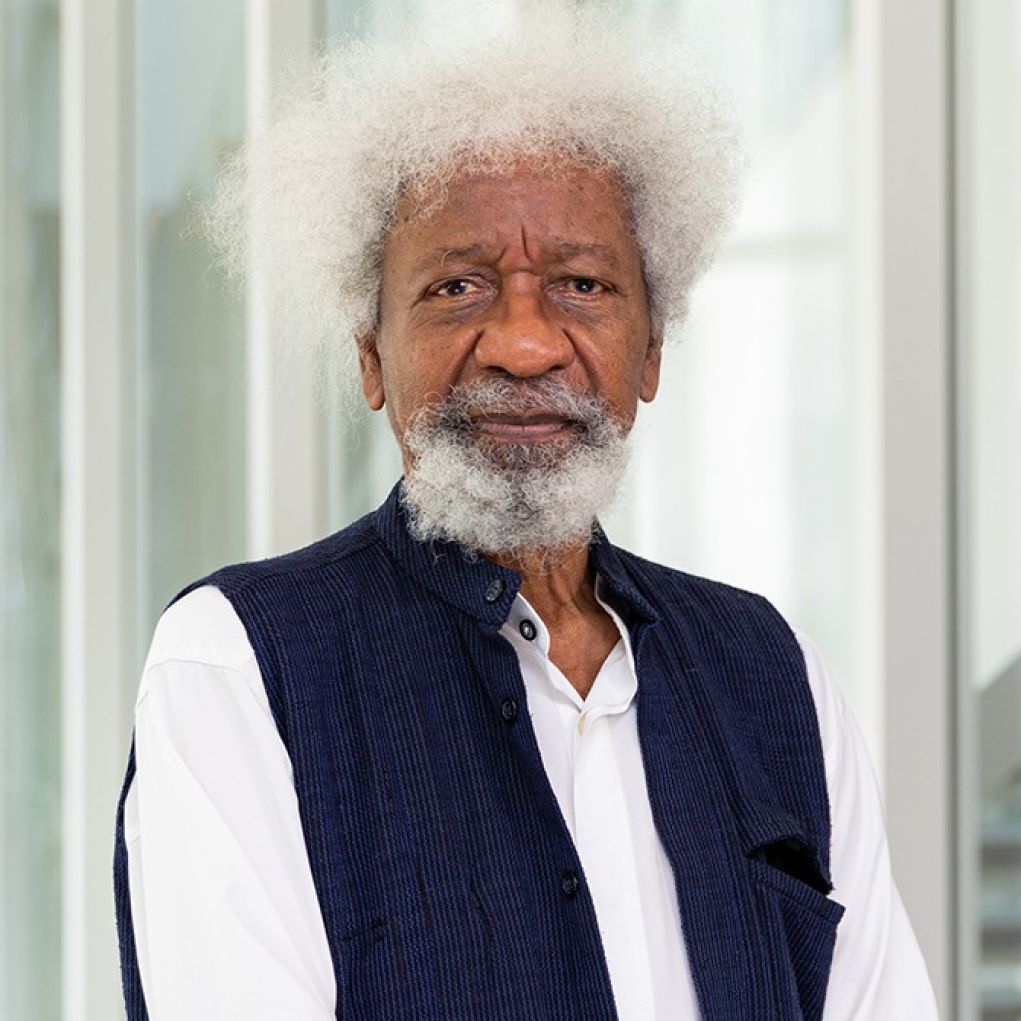
In a recent interview, renowned Nigerian playwright and Nobel laureate Prof. Wole Soyinka expressed deep concerns over the direction the United States has taken under the leadership of former President Donald Trump.
Soyinka, who has long been an outspoken critic of political events around the world, stated that the current political climate in the U.S. is one of the “saddest developing phenomena” he has witnessed. Reflecting on Trump’s presidency, the world-acclaimed writer shared his sense of sorrow and disappointment, emphasizing that the situation in America was particularly disheartening for a country that is supposed to represent progress.
Soyinka’s criticism of Donald Trump is not a new development. In 2016, before Trump took office, the Nigerian literary giant made headlines by threatening to shred his U.S. green card if Trump won the presidential election. At the time, Soyinka voiced his discontent with the potential for Trump’s policies to negatively impact not only the U.S. but the world at large. Although Soyinka never followed through with his promise to shred his green card, his public condemnation of Trump’s policies remained steadfast throughout his presidency.
Soyinka did not shy away from his harsh judgment of Trump’s leadership, which he described as both regressive and damaging. Soyinka’s remarks echoed his long-held belief that Trump’s rise to power represented a backward step for the United States, undermining the country’s image as a beacon of democracy and progress on the global stage.
“I just feel very, very sad that what’s happening in the States should be happening in such a potentially progressive country,” Soyinka lamented during the interview. His words highlight the frustration felt by many who believe that the U.S. should be setting an example for the rest of the world in terms of leadership, justice, and the advancement of human rights.
The Nobel laureate’s concerns are not just limited to Trump’s rhetoric but extend to his policies, which many view as polarizing and harmful to both domestic and international relations. Under Trump, the U.S. saw a deepening divide between political parties, with many of his policies seen as benefiting the wealthy and fostering inequality. The Trump administration’s stance on issues like immigration, climate change, and race relations further fueled divisions within American society, leading critics like Soyinka to express their dismay at what they saw as a dangerous trend.
Soyinka, who has spent much of his life traveling and engaging with global political issues, was particularly concerned about the implications of Trump’s policies on the world’s perception of the U.S. He has been a vocal critic of any leadership that fosters division, intolerance, and a disregard for human dignity. In this sense, Soyinka sees Trump’s presidency as an affront to the values that many Americans and people around the world hold dear.
Moreover, Soyinka’s disappointment is not just based on his views of Trump’s leadership but also on the U.S. political system as a whole. The idea that such a controversial figure could rise to the highest office in the land is, to Soyinka, a reflection of a larger failure within the system. He has consistently warned against the dangers of populist leaders who exploit societal divisions for their own gain, often leading to the erosion of democratic institutions and principles.
Soyinka’s remarks also serve as a call for reflection. As a writer and public intellectual, Soyinka has always placed great importance on the role of the individual in holding political leaders accountable. He has been a vocal advocate for social justice and human rights, and his disappointment with Trump’s presidency highlights the larger global struggle for these values.
While Soyinka remains critical of Trump, his comments are also a reflection of his belief that the U.S. should be doing better. He does not want to see a country that once symbolized hope and opportunity for many around the world slide into a state of divisiveness and decline. Soyinka’s concerns also resonate with many Nigerians and Africans who have been watching the events in the U.S. with a sense of unease.
The renowned playwright’s stance on Trump’s presidency has struck a chord with people across the world, who share his sentiments about the detrimental effects of Trump’s policies. Soyinka’s words come at a time when the U.S. is still grappling with the aftermath of the Trump administration, with many Americans still divided over its long-term impact on the nation.
As an intellectual, Soyinka has long been committed to engaging in political discourse and challenging the status quo. Throughout his career, he has used his platform to speak out against injustice and inequality, whether it be in his home country of Nigeria or on the global stage. His criticisms of Trump’s presidency are just the latest in a long line of political interventions that have made Soyinka a significant figure in global politics.