
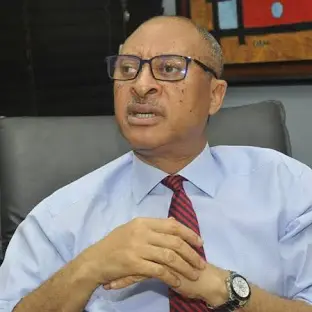
A Professor of Political Economy, Pat Utomi, has raised concerns over what he described as “unseen hands” working to weaken opposition parties in Nigeria ahead of the 2027 general elections.
Utomi made this known on Tuesday during an interview on Prime Time, a program aired on Arise Television. He warned that such interference could threaten the country’s democratic process if not urgently addressed.
According to him, several opposition parties, including the Labour Party, Peoples Democratic Party (PDP), and the African Democratic Congress (ADC), are facing internal disruptions that may not be entirely natural.
Utomi, who serves as Deputy Chairman of the ADC Manifesto and Policy Committee, suggested that external forces may be influencing events within these parties to weaken their ability to present a strong challenge in the next election cycle.
“There are some unseen hands trying to disrupt the Labour Party, PDP, and the ADC,” he said during the interview.
While he did not name any specific individuals or groups, Utomi stressed that such interference is a serious concern for Nigeria’s democracy. He noted that political parties are expected to serve as platforms for representing the will of the people, and any attempt to destabilise them could undermine public trust.
He also pointed out that internal challenges are not new in political parties, adding that every party has its share of strengths and weaknesses.
“In all political parties, there will be the good, the bad, and the ugly,” he said, explaining that some members may act in ways that harm their own organisations.
Utomi further stated that certain individuals within parties could become “willing tools” for outside forces, knowingly or unknowingly contributing to internal crises.
His comments come at a time when political activities are gradually picking up across the country, with parties beginning to strategise ahead of the 2027 elections. Analysts say early signs of alliances, defections, and internal disagreements are already shaping the political landscape.
The professor warned that if these trends continue, they could discourage citizens from participating in the democratic process. According to him, there is growing concern that many Nigerians are losing faith in democracy due to the behaviour of some political leaders.
He cited findings from studies on governance in Africa, which show that while citizens generally support democratic systems, their expectations are often not met by those in power.
“The consistent outcome of this data is that African people want democracy, but the people getting into power in Africa are preventing democracy from really taking place,” he said.
Utomi added that this situation has led to frustration among citizens, many of whom feel disconnected from the political process.
“The people are losing hope in democracy,” he warned.
Nigeria returned to democratic rule in 1999 after years of military government. Since then, the country has conducted several general elections, with power alternating between major political parties.
However, the system has faced challenges, including allegations of electoral malpractice, internal party conflicts, and concerns about governance and accountability.
In recent years, opposition parties have struggled to present a united front against the ruling party, often due to internal divisions and leadership disputes. Observers say these issues have reduced their chances of success in national elections.
Utomi’s remarks highlight the need for stronger institutions and more transparent political processes. He called on stakeholders, including political leaders, civil society groups, and citizens, to work together to protect the integrity of the system.
“We must save our country from that,” he said, urging Nigerians to take the issue seriously.
For many Nigerians, the key issue remains how political developments affect their daily lives. Concerns about the economy, security, and cost of living continue to dominate public discussions, and voters are likely to focus on these issues as the next election approaches.
As the debate continues, Utomi’s warning adds to growing calls for reforms that will strengthen democratic institutions and ensure that elections are free, fair, and credible.
With the 2027 general elections still some time away, the coming months are expected to see increased political activity, including coalition talks and policy debates.
For now, Utomi’s message serves as a reminder of the challenges facing Nigeria’s democracy and the need for vigilance in protecting it.
As political actors prepare for the next round of elections, many Nigerians will be watching closely to see whether their leaders can rise above internal conflicts and focus on delivering real change.