
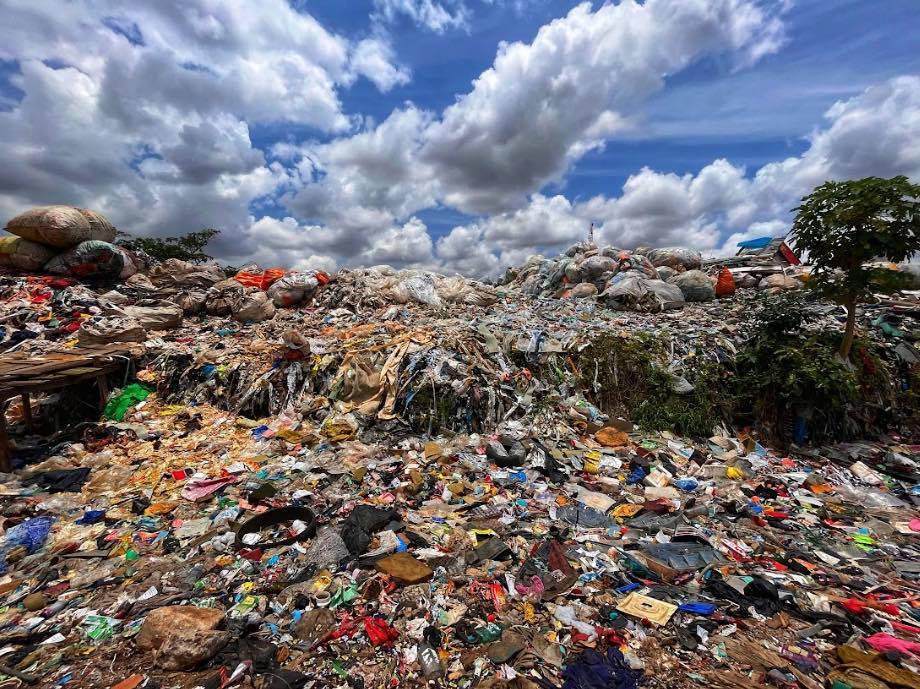
The Lagos State Government is set to phase out some of its ageing landfills and replace them with modern waste management facilities as it intensifies efforts to tackle the state’s growing waste disposal challenges.
The plan will involve the development of material recovery facilities, transfer loading stations and waste-to-energy plants as part of a wider move to transform Lagos from a traditional waste disposal system to a circular economy.
The Managing Director and Chief Executive Officer of the Lagos Waste Management Authority, Muyiwa Gbadegesin, disclosed this on Tuesday during the agency’s mid-year media parley at its headquarters in Ijora-Olopa, Lagos.
Gbadegesin said some of the state’s major dump sites were facing serious challenges, particularly during the rainy season, as flooding affected access roads and disposal platforms.
He said the situation had become more difficult because some landfills were reaching the end of their useful life and could no longer cope with the volume of waste generated in the state.
“The capacity of the dump site itself to receive waste is limited now because it’s approaching the end of life. It can properly be called an expired landfill,” he said.
The LAWMA boss said the state had begun engineering interventions to keep the affected sites functioning while alternative facilities were being developed.
According to him, the rehabilitation of Road E, which serves as the second access road to one of the landfill sites, as well as the construction of two disposal platforms, had improved the movement of waste trucks.
He said the intervention, carried out with the support of ZoomLion Nigeria, had reduced the time trucks spent at the site and increased the number of trips made by waste trucks.
Gbadegesin said the number of truck trips increased from 1,394 in one week to 1,781 the following week following the intervention.
He, however, stressed that the measures were only temporary as the state was already working towards replacing old waste disposal sites with modern facilities.
One of the major projects is the development of transfer loading stations at Olusosun and Solous.
Gbadegesin said the Olusosun transfer station would have the capacity to receive about 2,500 tonnes of waste daily in a controlled indoor environment.
He explained that the facilities would reduce the direct exposure of residents to waste and improve the movement of refuse from collection points to final treatment and disposal facilities.
“So, all you are going to see with this transfer loading station is trucks going in, trailers coming out. You will not see the waste at all,” he said.
He added that once the existing dump sites were finally decommissioned, they would undergo rehabilitation, including gas extraction and the use of geotextile materials to manage environmental risks.
Some of the sites could also be converted into other waste management facilities after rehabilitation.
The state is also planning waste-to-energy plants as part of its long-term waste management strategy.
Gbadegesin said one of such facilities was planned for Badagry, adding that the project would require substantial investment and could take between three and five years to complete.
“We want to do another waste-to-energy plant in Badagry. These are long-term projects, three to five years minimum, but the planning has already started for that,” he said.
Waste-to-energy plants are designed to process waste and convert part of it into useful energy. The approach can help reduce the amount of waste sent to landfills while providing another source of energy.
The LAWMA chief said the state was also developing material recovery facilities in Ikorodu and Badagry.
The facilities, which would cover about 50 hectares each, are expected to process bulk waste and separate materials into different categories, including organic waste, plastics, metals and textiles.
According to him, about half of the waste received at the facilities would be organic material.
He said such waste could be processed into compost for farmers and gardeners, while recovered plastics could be used to produce waste bins for residents.
The plan is part of Lagos’ effort to reduce its dependence on landfills and recover useful materials from waste rather than simply dumping them.
Lagos, with its large population and high level of commercial activity, generates huge volumes of waste every day. Managing the waste has remained a major challenge, with blocked drainage channels, illegal dumping and overflowing waste points contributing to flooding and environmental concerns in some parts of the state.
Gbadegesin said improving waste collection was also central to the government’s plan.
He disclosed that LAWMA had acquired 10 additional trucks, six of which were being deployed for direct house-to-house waste collection in parts of Mushin where there were no Private Sector Participation operators.
He said the state was expecting another 150 compactor trucks before the end of the year.
Of the 150 trucks, 114 were ordered by the 57 local governments and Local Council Development Areas, while the state government ordered 36.
He said the additional trucks would increase waste collection capacity this year, with plans to expand the fleet further next year.
The agency is also reviewing the Private Sector Participation programme, which is responsible for a significant part of waste collection across the state.
Gbadegesin said the reform involved 438 PSP operators covering 377 wards across Lagos.
He said six working groups had been established to review the programme and submit their reports within one month.
The recommendations would then be presented to the Ministry of Environment and Water Resources, the State Executive Council and the Lagos State House of Assembly for consideration and approval.
The goal, he said, was to create a stronger PSP system with enough investment, equipment and trucks to provide reliable waste collection services to residents.
Beyond infrastructure, LAWMA is also increasing enforcement against indiscriminate waste disposal.
Gbadegesin said five enforcement units operated daily in collaboration with relevant government agencies.
He warned residents against dumping refuse on roads, streets, drainage channels and other public spaces.
“The policy is zero tolerance for indiscriminate waste disposal. We do not want anyone in Lagos dumping waste in public spaces, and anyone who does so, we will enforce against that to the fullest extent of the law,” he said.
The agency also disclosed that 259 environmental offenders were prosecuted between January and July, with all the cases resulting in convictions.
Gbadegesin said the convictions were achieved because the agency ensured that sufficient evidence was gathered before taking offenders to court.
He said video and photographic evidence were among the materials used in many of the cases, with several offenders caught while dumping waste.
However, the LAWMA boss said enforcement alone could not solve the state’s waste problem.
He called for stronger cooperation with local governments, traditional institutions, community groups and residents to improve awareness and encourage proper waste disposal.
He said the long-term objective was to move Lagos away from a linear waste system, where waste is generated, collected and dumped, to a circular system where waste is sorted, recycled, reused or converted into useful products and energy.
“The goal of our policy direction now is to take Lagos from a linear system of waste management to a circular system. And that requires investments, it requires engagements, it requires amendments to our law,” he said.
The proposed shift is expected to reduce the pressure on existing landfills while creating opportunities in recycling, compost production, waste recovery and energy generation.
Gbadegesin assured Lagos residents that the government would continue to maintain and rehabilitate existing dump sites during the transition.
He said the development of new facilities would be pursued alongside measures to improve waste collection, strengthen enforcement and encourage residents to sort and dispose of waste properly.
The planned changes are expected to reshape waste management in Lagos in the coming years, with the government relying increasingly on recycling, material recovery, modern transfer stations and waste-to-energy technology rather than continued dependence on ageing landfills.